
BUYING A PROFESSIONAL BLENDER
A vital part of the modern professional kitchen or bar, the commercial blender or liquidiser has evolved over time to become one of the top time saving appliances used by chefs, cooks, bar staff and other professionals. Today, there are three distinct types of commercial blender, all of which are stocked and available for next day delivery here at Nisbets Ireland. It’s important to know the differences between them, as on first glance they may look very similar indeed.
SHOP COMMERCIAL BLENDERS NOWBAR BLENDERS

As suggested by the name, bar blenders are at their best when used front of house in bars, pubs, hotels and clubs. Primarily designed to be strong and powerful enough to crush ice, these blenders generally have tough, durable blades and robust motors to blend cocktails and make smoothies. It’s vital to ensure you match the capacity of the jug to your expected demand, as small single litre blenders might be great for the occasional cocktail, but it might not be up to the job if there are long queues. Some of the largest bar blenders are supremely powerful and can blend two cocktail pitchers simultaneously.
What to Look For
- Capacity: the blender needs to be able to produce enough to meet demand.
- Power: more power means faster blending. Faster blending means you can serve more customers.
- Noise: blending a cocktail or crushing ice can be pretty loud. Handy sound enclosures help to reduce the noise to promote a more comfortable atmosphere.
KITCHEN BLENDERS
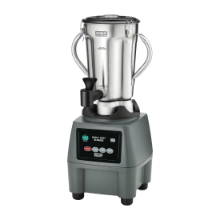
Kitchen blenders, occasionally called food blenders, are very much at home in restaurant kitchens, although they are widespread throughout the whole catering industry. Whereas bar blenders are mainly designed for beverages and crushing ice, the kitchen blender excels at blending both food and drinks. In addition, kitchen blenders are generally designed to blend hot foods such as soups, meaning these machines are especially useful for businesses where liquefied food is essential, such as residential care homes or nurseries. As a primarily back-of-house machine, kitchen blenders can also be much larger than bar blenders, with jug capacities reaching as much as four litres in the largest versions.
What to Look For
- Capacity: vital to ensure the blender can meet the demands of your kitchen.
- Manual/Programmable: whilst manual blenders are simple to use, programmable blenders allow you to set a pre-set routine to save time and produce consistent results every time.
For both Bar Blenders and Kitchen Blenders, the construction of the jug is a critical consideration. This table should help you decide which type of jug is suitable.
| Glass Jug | Plastic/Polycarbonate Jug | Stainless Steel Jug | |
|---|---|---|---|
| Shatter Resistant | ? | ? | |
| Scratch Resistant | ? | ||
| Blend Hot Food | ? | ||
| See Contents | ? | ? | |
| Dishwasher Safe | ?* | ?* | ?* |
STICK BLENDERS

The latest addition to the blender family, the stick blender (sometimes called an immersion blender or hand blender) was invented in the ‘50s as a lightweight alternative to countertop blenders. As the name suggests, these are hand-held devices delivering distinct benefits. The great thing about a stick blender is that, rather than bringing your food to the blender, the stick blender is portable enough for the chef to bring the blender to the food – perfect for mobile catering or cramped kitchens. Stick blenders generally have various speed settings and adjustable, interchangeable shafts, allowing a wide variety of mixing and blending types such as mashing, puréeing, chopping, emulsifying and whisking.
What to Look For
- Shaft length: the bigger the shaft, the higher the blending capacity. Shafts can be as small as 160mm, all the way up to over 550mm for the largest preparations.
- Speed Control: whilst commercial stick blenders can vary in speed between 700-19,000rpm, some have “stepped” speed control and others have full speed control for maximum blending precision.
- Detachable Shaft: for versatility, many stick blenders have detachable shafts, allowing you to fit different attachments such as whisks or ricers. Detachable shafts also make cleaning the blender faster and safer.
- Corded/Cordless: sometimes cords or wires can just get in the way. Modern cordless stick blenders easily equal the performance of their corded counterparts, although charging and the additional weight needs to be taken into consideration.