
Which Lightbulb Do I Need?
We often overlook the effect lighting can have on a business, it can dramatically alter a room’s ambiance making it feel warmer and more inviting. In restaurants this is particularly important as it can make diners feel relaxed, their experience more enjoyable and even make food more appetising. There is also the concern of safety: dim lighting and sharp knives is a dangerous combination! This useful guide will help you decide which bulb is right for your lighting needs.
SHOP LIGHTBULBS NOWBulb Wattage
Wattage no longer relates to brightness but a limitation of its power input. Now with more efficient light bulb technology this is not quite as straightforward. It’s imperative to bear in mind when buying any lighting fixture that you need to verify the maximum wattage it will take. For example, a bulb with too high a wattage could overheat which could generate a fire hazard or damage to the fixture itself. Often people get the purpose of wattage wrong, it is quite simply the indication of how much power a bulb consumes, not the amount of light it generates as it is often confused for.
What Are Lumens?
Traditionally the power and luminosity of a light bulb was measured in watts but with developments in technology, more advanced bulbs are being manufactured meaning watts are no longer a useful unit of measurement for new energy-saving light bulbs, which consume much less power than old-style incandescent bulbs. Therefore the measurement of lumens has been created to inform the consumer how much light the bulb will emit in order for them to determine which type is suitable for their needs. A larger amount of lumens means it will be a brighter light and fewer lumens means it will be a dimmer light. For example, to replace a 100 watt incandescent bulb, look for a bulb that gives you roughly 1600 lumens.
What Is The Kelvin Scale?
After lumens, the next thing to look for is colour temperature; this choice is often dependant on personal taste and can really impact the area you are trying to light. The colour of the light according to the Kelvin scale ranges from yellow at the lowest end of with white in the middle, and a blue tone at the high end. The very highest brightness is often reserved for reading lights and exhibitions. Task lighting also uses light with a high colour temperature, which is particularly effective for kitchen surfaces and sinks.
Colour Temperature
- Soft white / Warm white (2700 Kelvin): Best for bedrooms and living rooms; providing a warm and inviting glow which feels welcoming
- Bright white / Cool white (4100 Kelvin): Best for general lighting in kitchens and bathrooms, providing an energising white light
- Daylight (5000-6000 Kelvin): Best for task lighting in kitchens or above bathroom mirrors, ideal for intricate work stations as it provides the greatest contrast amongst colours
Bulb Shape
The shape of a bulb will determine what type of light is produced and the width of the beam, so it is crucial to get it right. Standard models will generally allow for a 360-degree distribution of light and spots will deliver a concentrated light at a 25 to 35-degree beam angle. The common GSL shape is ideal for lighting larger spaces such as ceilings as it has a wide angle of range. If you wish to light something like a recess area a reflector bulb would be appropriate.
Each bulb is designated a code, like ‘A-19’. The letter part of this code, the ‘A’, refers to the shape of the bulb itself, whilst the number is the measurement of the bulb’s diameter at its widest point, which is expressed in 1/8ths of an inch. So A-19 is an arbitrary shaped bulb measuring 19 1/8ths of an inch in diameter.
Bulb shape examples
- Arbitrary (A15, A17, A19, A20, A21, A23)
- Globe (G9, G11, G12, G16, G16.5, G19, G25, G30, G40)
- Candle (C6, C7, C9, C11, C15)
- Multifaceted Reflector or Quartz Reflector Lamp (MR8, MR11, MR16, MR20)
- Blown Reflector (R12, R14, R16, R20, R25, R30, R40)
- Bulged Reflector (BR25, BR30, BR38, BR40)
- Parabolic Aluminized Reflector (PAR14, PAR16, PAR20, PAR30 Short or Long Neck)
- Twist (T2 Coil, T3 Coil, T4 Coil)
Cap Type or Base Fitting
Bulbs have two common fittings in the form of the bayonet and edison screw. The most common is the bayonet cap, this type fits into the socket with a simple push and twist motion. These can be identified by their smooth metal base featuring two small pins that stick out the side. The other most common fitting is the Edison screw. These as their name suggests, simply screw into the socket. However, there are several more cap types that may not be so familiar..
Bayonet cap
The bayonet cap, also known as BC or B22d, is one of the most regular light bulb fittings you’ll ever see. It measures 22m in diameter and has two protruding lugs that keep it secured into a light fixture with a simple ‘push and twist’ action. The small bayonet cap or SBC typically measures 15mm in diameter, but works in much the same way as the large bayonet cap fitting.
SHOP BAYONET CAPEdison screw cap
The Edison screw fitting, ES or E27 measures 27mm in diameter and is another common light bulb fitting. The small Edison screw or SES fitting is often used in appliances and smaller decorative light fixtures. There are several other variations of the Edison screw including MES and GES but these are much rarer.
SHOP EDISON SCREWHalogen capsules
These small capsules are named and categorised by the distance between their two connecting pins. The G4 for example has pins that are 4mm apart.
SHOP G4 BULBSHalogen and LED spotlights
GU4 / ME11 are push fit light bulbs, whilst the GU5.3 / MR16 are a low voltage type of bulb. The GU10 or CG10 twist and lock into the light fixture. The only difference between the GU10 and GZ10 is that the former has a bevel around the base whilst the GZ10 has a square corner. This means that the GU10 can fit either fixture, whereas the GZ10 cannot.
SHOP GU10 BULBSSHOP MR16 BULBS
Tube lighting: flourescents and LEDs
The most common fitting for tube shaped lighting is the R7, which features in flourescent and LED tubes. These have a two pin fitting at both ends of the bulb. There is also a smaller sized tube fitting, the T5, which uses the G5 fitting (5mm between pins). Architectural strip lights are available with two types of fittings also: an S14 and S14d connector.
SHOP R7 BULBSTypes of Bulb
LED
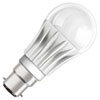
LEDs use semiconductor technology to produce light and are the most energy efficient type of bulb, using almost 80% less than traditional models. They are also incredibly durable with claimed life expectancies of around 25,000 hours. LED lighting is instantly bright and can create a warm atmosphere. They usually have a pure and elegant design and are a sustainable choice.
SHOP LED LIGHTBULBSHalogen
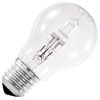
Similar to traditional bulbs featuring a tungsten filament, however, these have halogen gas surrounding the filament allowing the bulbs lifetime to be extended. They may cost more than other bulbs but they can also last up to three times longer than a standard light bulb of the same wattage and can be 20% more efficient. Halogen bulbs produce a very attractive bright light that closely resembles sunlight and they are available in lots of different sizes, shapes, wattages and colours.
SHOP HALOGEN LIGHTBULBSCompact Fluorescent (CFL)
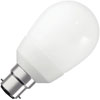
Compact fluorescent is a generic term used for a variety of bulbs. These are the most common type of light bulb and are smaller versions of the familiar fluorescent tube lamps used in offices and car parks. They are widely available in a range of fittings and brightness’s, typically lasting around 8,000 hours and uses 75% less electricity than an incandescent. It’s a great bulb for creating any kind of ambience with high energy savings and a long lifetime.
SHOP CFL LIGHTBULBSInfrared
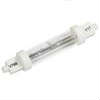
Infrared bulbs and lamps use low amounts of energy, and can heat up quickly, making them perfect for use in buffets and food display to keep food warm. Therefore, they are mostly jacketed to prevent them from shattering and leaving glass remnants in food. They also feature a low pressure design which makes them very reliable.
SHOP INFRARED LIGHTBULBS
LED Strip Lighting
LED strip lights provide a cost-effective form of decorative lighting which has a vast range of potential applications. These are easy to install and give a crisp light that can illuminate your entrances clearly and reflect off polished floors underneath bar surfaces. There are many potential applications for strip lighting, and the variety of colour and transition effects makes them incredibly popular.