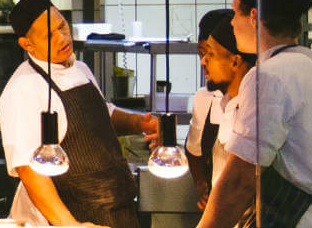
Why are more people setting up small bakery businesses?
If you're looking to try your hand at opening a bakery, now is the perfect time to do it.
The popularity of cooking shows on TV means there is a growing demand for artisan breads, cakes and patries. The bread and morning goods market is worth over €394 million (Irish Food Board) in Ireland, and projected to grow by over 2% per year.
So what do you need to know if you are planning to grab a slice of this lucrative market by opening your own small bakery business?
How to start a bakery business

Building a successful small bakery business takes a lot of planning and research, as there are lots of things you need to know and do. The most important things to think about before you open a bakery business are how you will:
- Market your new venture
- Price your product to make a profit
- Decide where and how to sell your cakes
- Determine how you will stand apart from your competitors
- Assess whether your kitchen and equipment is fit for purpose
How will I make people aware of my business?

A large circle of friends and family may have kept you busy when home baking was your hobby, but you’ll need to think bigger for your business to become sustainable.
The key to long-term success is to ensure you build a loyal customer base. That means you will need to get your name and quality of work seen by as many people as possible.
Over €1 billion is spent per year on advertising in Ireland, and while you are operating on a smaller scale, it still makes sense to have factored in some money for marketing as part of your start-up costs. Initially money will probably be tight, but there are still lots of ways to capitalise on free and minimal cost advertising.
Immediately, you should:
- Make up some business cards and distribute with every order
- Set up separate business Facebook, Twitter and Instagram pages to showcase your best work
- Join local Facebook groups to advertise special promotions, weekly deals or free delivery offers
- Think about paying for social media ads to increase the amount of local people who see your page
- Offer to bake cakes for free in return for local advertising
- Contact your hyperlocal newspaper to talk about advertising
- Think about investing in a website

Ranking highly on Google search results is another way to drive custom to your business. The search engine processes over 3 billion queries per day. That’s a lot of people looking for a lot of stuff!
Getting started means signing up to get listed with Google My Business. You can find out how to sign up along with the best ways to improve local search visibility in our getting listed on online maps guide
Monitoring your marketing efforts is also crucial. Understanding how your customers find out about you will help concentrate your future advertising efforts for the best returns.
Article: Find ways to get your business known with our marketing for small catering businesses guide.
Where can I sell cakes to raise my business' profile?
Car Boot Sales/Street Fair Stalls
Make sure you find a well-attended event and always seek the permission of the organiser. You may have to cover a pitch fee. Give out business cards with all purchases.
Local Cafes, Restaurants, Sandwich Shops and Delis
Reaching out to local businesses is a great way to secure regular income. It is also a fantastic platform to showcase your work and advertise your business. You’ll need to be tenacious to persuade local business owners that they need to be selling your cakes.
Once you have managed to secure a supply agreement, you’ll need to be reliable and proactive enough to be able to supply the demand consistently. Where possible, try and incorporate your branding into the cakes or ask the business to place your logo close to where they are displayed.
Also ask about mutual partnership advertising on social media. Make sure you also use those platforms to publicise what days your cakes will be available to buy at the third-party business.
Be realistic on pricing. Your potential third-party business partner won’t take anything from you unless they can make a profit on it. So what do you need to know about pricing to give you the best opportunity of building a sustainable business?
What is profit margin?
A profit margin is the amount of money you make/lose above/below the cost of making your cake. Margins are subjective to each business owner and influenced by all sorts of things including demand, market conditions and competition.
They are an indicator of how tightly you can control your costs. The foodservice industry tends to operate on thin margins – lower than 3% in some cases. Very few businesses will be making above 20p on every 1 pound they spend. That’s why you need to spend some time pricing your cakes accurately.
How Much Should I Charge for My Cakes?
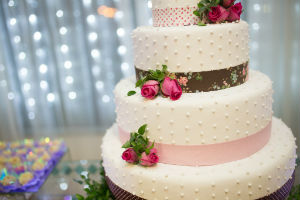
When you baked purely for love, costing to you meant nothing more than perhaps covering the price of the ingredients. After all, most of your customers were friends and family, right? Once you decide that baking is to become your means of making a living, you have to be a bit harder-nosed about pricing.
Some overhead costs you will have to consider are:
- Rent
- Utilities
- Business insurance
- Business tax
- Labour
- Maintenance
- Waste management
Working out cost per cake is a good way of ensuring your business is not losing money. You definitely need to make sure that you are not undervaluing the cost of your labour. It is a mistake a lot of experienced home baking businesses owners say they made when starting out.
If you are going to spend over 30 hours making a wedding cake, you need to receive a fair return on that investment of time and effort. Once you’ve worked out cost per cake, you should assess what your competitors are charging.
Can you match them on price? Are you paying too much for your ingredients? Can you find a more reasonably-priced supplier? Could you buy in bulk for savings? If not, is there something you could offer that would persuade a customer to pay more? What are your unique selling points?
What additional services can I offer?
There are lots of ways to market your business to avoid an over-reliance on under-cutting your direct competitors on price. One of the biggest selling points for any business is to either be able to do something special that your competitors don’t offer or to do it better. There are no bigger unique selling points than being the best, the first or the only one doing what you do.
Free Delivery
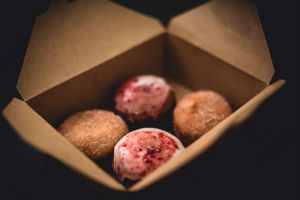
It’s certainly a great selling point, but you have to be realistic as to whether you can afford to offer it. You are likely to be operating on a pretty thin profit margin and you need to calculate whether you are covering the cost of fuel, wear and tear on your vehicle and a possible hike in vehicle insurance.
As a compromise, perhaps you could offer free delivery for orders over a certain value or factor the charge in to the cost of the cake. If you commit to a delivery service, the most important thing you need to be is reliable. If you can’t be sure that you are able to get your cakes to the desired locations on time, every time, it is better not to offer a delivery service at all.
Free From
Free From is food and drink that excludes one or more ingredients to which some consumers are either intolerant or allergic. The use of wheat-free and gluten-free flour, dairy-free milk, nut-free and egg-free cakes and biscuits have been growing in popularity as a result.
In fact, data from our spring 2018 Pulse Survey found allergen safe foods listed amongst the most popular growing trends by catering professionals. And it’s not just those affected by an allergy spending their money on ‘free from’ foods. The conversion is increasingly becoming a lifestyle choice.
Global data insights firm Kanter found that only 1% of the UK and Ireland population is medically required to avoid gluten, while 15% are intolerant to lactose. Yet they say that more than three-quarters (78%) bought ‘free from’ foods in 2017. It’s definitely worth looking around to see if any of your local competitors are tapping into what continues to be a growth market.
Healthy Options
With an increasing number of vegans and vegetarians, along with the fact that modern day consumers are now more health conscious than ever, it makes sense to think about putting a healthy twist on your offering.
Again, its popularity is backed up by our data, which saw ‘healthy eating’ named top trend in all three Pulse Surveys between spring 2017 and spring 2018. Cutting back on sugar to cater for people on low carb/high protein ketogenic diets or making cakes for vegans or vegetarians could help you find a potential niche.
Locally-Sourced Ingredients
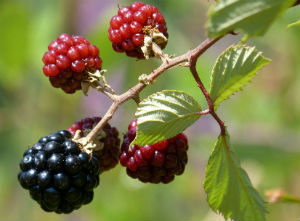
Another trend that was mentioned by Nisbets customers was an increased demand for locally-sourced ingredients. It’s a way for consumers to support the local and national economy and is also considered eco-friendly when the produce doesn’t have to travel as far to reach the plate.
The ‘Made in Britain’ mark of approval was cited as a trend even more popular than vegetarianism and veganism in research conducted by the food company Beacon in 2017.
It also suggested that most diners would pay up to 10% more for local British produce; a quarter would pay up to 25% more; and some would increase their spend by 50%.
Other benefits include fresher produce with greater nutritional benefit, along with seasonality of fruits in particular, which would give you the chance to align your cake menus with the season to keep them fresh and engaging. If your market research has identified customers who are willing to pay more for local, you could look at locally sourcing your staples such as flour, dairy products, salt, sugar and fruit.
It shouldn’t be too hard for you to find a farm shop locally, with over 3,500 currently operating across the UK and Ireland. A farm shop is a retail outlet located on a farm or an independent shop that sells produce from local farms or businesses.
Once you build a relationship with your farm supplier, you could ask about the possibility of doing a deal to sell your locally-sourced cakes in the shop in return for a discount on your purchases. Could you advertise each other’s business through your shared stake in the concept of locally sourced? Or do you trade close to an independent café or restaurant that shares the same locally-sourced ethos?
Why not approach them with your locally-sourced cakes to see if you could work in partnership? If you are planning to make locally sourced ingredients one of your unique selling points, be sure to tell that story in your marketing activities and on your packaging.
Is your kitchen equipment fit for purpose?
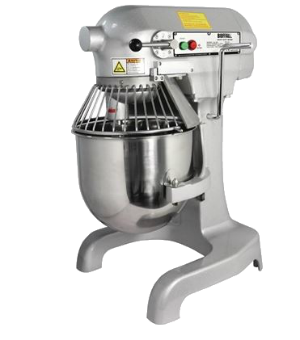
If you’re planning to set up from home or small commercial premises, you’ll need to assess how suitable your kitchen and equipment is to handle increased demand. You might get to a point pretty quickly where you are receiving five or six orders per day.
Will you have the oven capacity to cope? Will your domestic oven be reliable enough to create perfect bakes every time? Will you have enough space to work? Commercial equipment will boost your efficiency and help you to cope with bigger demand.
The benefits of a commercial oven
Ovens are a great example of the benefits of commercial equipment over domestic equipment when you are running a catering business. The main benefit of a commercial convection oven is greater cooking capacity, allowing you to cook three or four cakes at a time.
The use of intelligent fan technology also ensures even heat distribution throughout the oven for consistent cooking results. We have a selection of compact design plug in commercial convection ovens suitable for use in a domestic or small commercial cooking space.
If your business grows to the point where expansion into larger commercial premises is necessary, we also have a choice of hardwired convection ovens for even greater power and capacity.
Small bakery business essentials
A large capacity commercial mixer and some best value commercial refrigeration are other things you may want to consider as your business grows. Some other essentials to ensure your kitchen is fit for commercial purpose baking include:
- Bakeware: commercial standard cake tins, muffin pans and loaf pans that are designed for frequent use
- Moulds and Ramekins: shaped moulds, dariole moulds, pudding basins and ramekins for individual cakes and desserts in a variety of shapes and sizes
- Baking Tools and Utensils: pastry knives, dough scrapers, cookie cutters lattice pastry rollers, pastry brushes, rolling pins, hand whisks, silicone spatulas, sieves, sifters and dredgers and kitchen graters
- Cake Decorators: piping nozzles and bags, edible glazes, modelling tools, icing turntables and acetate roll
- Baking Scales and Measures: weighing scales, measuring and mixing jugs, kitchen timers, thermometers, measuring spoons and cups
- Bakery Consumables: foils, films, baking paper, disposable piping bags and clips
TIP: Prepare dairy products using white pastry boards to avoid cross contamination.